Natural Beekeeping in Texas: The Beginner’s Guide to Treatment-Free Hives
Here at Respite Bee Farm, we’ve watched countless folks discover what natural beekeeping in Texas can really be about. It isn’t just another way to keep bees. It’s about keeping bees in a way that will let these incredible creatures do what they have been designed to do. When you start with low treatment or even a wild hive that’s treatment free from day one, you’re building something that will work with nature instead of fighting against it. And here in Central Texas, where the seasons stretch long and the summers test everything, that matters more than you might think.
I love teaching about beekeeping here in Central Texas, in fact I teach a full internship on the farm. So I’m excited to go into depth about natural beekeeping in Texas.
Let me be honest with you though. This path is not going to be the easiest one. However, if you’re willing to learn to be still long enough to watch your bees as well as accept that some things are beyond our control, you’ll see natural beekeeping in Texas is more about understanding.
Why I Started With Natural Beekeeping
Learning From the Beginning
I have made plenty of mistakes over my years of beekeeping, and am still very much learning myself. That being said, I hope this guide can walk you through some of the things I have learned along the way in our Texas climate.
When I first started keeping bees, I was completely overwhelmed by every intervention that conventional beekeeping called for. It seemed like according to most forums or books, you needed what seemed like weekly intervention almost 8 months out of the year! That was strange to me. If bees survived just fine without me messing with them, maybe we were just overcomplicating things.
When I moved back home to Central Texas I had to transition my brain to what it meant to steward bees here in Texas. Let me just say, it is a drastic difference than the lush tropical island of Hawaii. Yet doing so put me on the direction of natural beekeeping with an emphasis on observational learning.
I decided to learn by watching what the bees actually do, not just following someone’s management calendar. That meant accepting I’d make mistakes. It meant some colonies wouldn’t make it. But it also meant the bees that did survive were teaching me something real about resilience and adaptation.
Here’s what I’ve found
When you start with natural methods from day one, you never develop that dependence on synthetic chemicals. Your bees adapt to local conditions from the beginning. And you learn to read bee behavior instead of just following instructions. That’s the foundation of good beekeeping, whether you’re treatment-free or not.
Why Natural Beekeeping Texas Works
Central Texas has been my classroom, and it’s taught me a lot about what bees need. We’ve got advantages here that folks up north don’t have:
- Long seasons for learning: Our bees stay active nearly eight to sometimes ten months a year, giving you more chances to observe and understand what’s happening
- Winters that don’t devastate: We don’t face the brutal cold weather of northern states that kill colonies or stress beekeepers out with endless preparational steps.
- Incredible diversity: From the Hill Country to the Blackland Prairie, we’ve got ecosystems that create opportunities for locally adapted genetics
- Growing community: More beekeepers are choosing natural beekeeping Texas methods, which means more mentors and more shared experience
Here’s the thing, summers here in Texas are brutal! It can be over 100 degrees for weeks all while there is minimal flowers blooming and you can see your bees struggling just like everything else. Natural beekeeping in Texas means understanding this and working with Texas’ climate, not against.
My Journey to Responsible Stewardship
Here’s the thing, I have a different view than some when it comes to natural beekeeping in Texas. When I started, I was completely treatment-free. No interventions at all, medically that is. I believed that was the purest form of working with nature. That’s how I did it in Hawaii so why would it be any different in my own native Texas home?
But over the years of watching my colonies struggle and sometimes die from varroa mite infestations, I had to wrestle with a hard question: what does good stewardship actually look like?
After prayer, a lot of research, and honest conversations with other beekeepers. I felt I should use minimal, naturally-occurring treatments for varroa mites. Specifically, I use oxalic acid in vaporized form (OAV) and in certain instances, OA in extended release strips.
Here’s why I still consider myself a natural beekeeper.
I’m not feeding my bees sugar syrups all year round. Or using synthetic chemical miticides. I’m not going to intervene with medications for every issue that comes up. The only treatment I use is a low-dose application of naturally-occurring acids to manage varroa populations, and I do it thoughtfully, and at proper times in the season.
This decision came from truly believing I would be a better steward of my bees by helping them manage an invasive parasite, rather than watching them suffer through an ugly death from the viruses mites carry. It’s a middle path that respects both nature and animal welfare. Something we have to take into consideration when working in a fallen world.
Understanding Natural Treatments for Mites
Why Oxalic Acid is Different
If you want to practice natural beekeeping in Texas, you need to understand varroa mites. They’re an invasive parasite from Asia that our European honey bees were not suppose to deal with. But, again we live in a fallen world.
If left completely untreated, mites will eventually overwhelm most colonies. That’s just reality.
Honestly, OA is not a synthetic chemical that is created in a lab. It is an organic acid that already exist in the ecosystem surrounding your bees. We’re just using slightly higher concentrations temporarily to knock back mite populations.
How I Use These Treatments
At Respite Bee Farm, here’s my approach to natural beekeeping Texas with minimal intervention:
Monitoring first: I don’t treat on a schedule. I monitor mite levels using alcohol washes. Only when mite counts reach concerning levels do I consider treatment.
Oxalic acid application: Oxalic acid can be applied multiple times a year, from spring to winter, in honey bee colonies with little to no brood or with large amounts. There is a different schedule of application one should take however if treating a hive with large brood chamber. I typically use it during the winter brood break when it’s most effective or right before the spring jump. Research has shown that oxalic acid is not harmful to the bees, but it does effectively control mites.
Timing matters: I never treat during major nectar flows, if I can avoid it. I time treatments for early spring or late fall when it’s most effective and least disruptive. But, again, that’s not set in stone. If a colony is looking unhealthy, or I catch a wild swarm, I will treat as long as it’s above 50 degrees.
The key difference between this and conventional beekeeping is that I’m not on a rigid treatment schedule with synthetic chemicals. I’m observing, monitoring, and intervening minimally with naturally-occurring substances only when necessary for colony welfare.
Why This Still Qualifies as Natural Beekeeping
Some other beekeeper might say any treatment disqualifies you from calling yourself a natural beekeeper. And I respect that view. However, I see it differently. Natural beekeeping in Texas, to me, is about:
- Not feeding sugar syrup regularly (only emergency feeding during severe dearth or after removing bees from a structure where they no longer have a years worth of honey stored up)
- Avoiding synthetic chemical miticides and medications
- Minimal intervention and observation-based management
- Working with bee behavior instead of forcing them into unnatural patterns
- Using only naturally-occurring substances when intervention becomes necessary for animal welfare
I am still fully committed to developing locally-adapted genetics.
Also I am letting my bees manage themselves 99% of the time. I really just don’t want to watch my bees suffer and die from an invasive parasite when I have access to naturally-occurring tools that really won’t leave any harmful residues.
For me, this is what I believe responsible stewardship looks like. But, I want you to decide for yourself where you draw that line.
Getting Your Equipment Together
Different Hive Styles for Natural Beekeeping in Texas
When folks ask me what hive to start with, I tell them the same thing: pick something you can manage comfortably. I’ve worked with all three of these styles for natural beekeeping in Texas, and each has its place.
Langstroth Hives:
These are what most people picture in their mind when they think of beehives. Stacked boxes with frames inside. These are popular because they work and are readily available anywhere. Some beekeepers that practice more natural beekeeping will recommend using foundationless frames. That will let the bees build their own comb the size and shape they want. Yes, it’s messier when you’re learning, and requires gentle hands during the hot summer days. But you’re working with the bees, not forcing them into a pattern that might not suit them.
Top-Bar Hives:
This is what I would do if I was a hobbyist and wanted to take a slower, more vintage approach. Everything’s at one level, so you’re not lifting heavy boxes. The bees build natural comb hanging from bars and in our Texas heat, the ventilation is excellent. For beginners, especially if you’ve got back problems or you’re working alone, top-bar hives make a lot of sense. Plus, they aren’t hard to make.
Horizontal or Long Langs:
The best of both worlds! Think of a top bar management style, yet with removable frames than can have foundation and then be spun out on an extractor instead of pressed. Best part about it, is they typically are built to fit Langstroth deep frames. This style hive also attracts the natural beekeepers because it uses dimensional lumber with thicker walls (higher R value) similar to that of a tree trunk, which in theory helps their health and stamina throughout the seasons.
Here’s what I recommend
If you’re starting out with natural beekeeping in Texas, go with the horizontal hive. They are significantly lower cost if you make them yourself, easier management, and it naturally aligns with the philosophy you’re pursuing. Plus there are free plans online and even if you aren’t savvy with a saw you can still figure your way into building one!
What You Actually Need
One thing I appreciate about natural beekeeping is how it simplifies your equipment list. Here’s what I tell people to start with:
- One full hive set up: Buy it or build it, but make sure it’s solid and painted or oiled well
- Protective gear: Don’t skimp here. Full suit, good veil, gloves, boots. Confidence comes from feeling protected. Ultrabreeze is a great American made company that check off many of the important details (velcro wrists, metal zipper, ventilated)
- Basic hive tool: For prying things apart (the bees glue everything together with propolis) I like the J hook
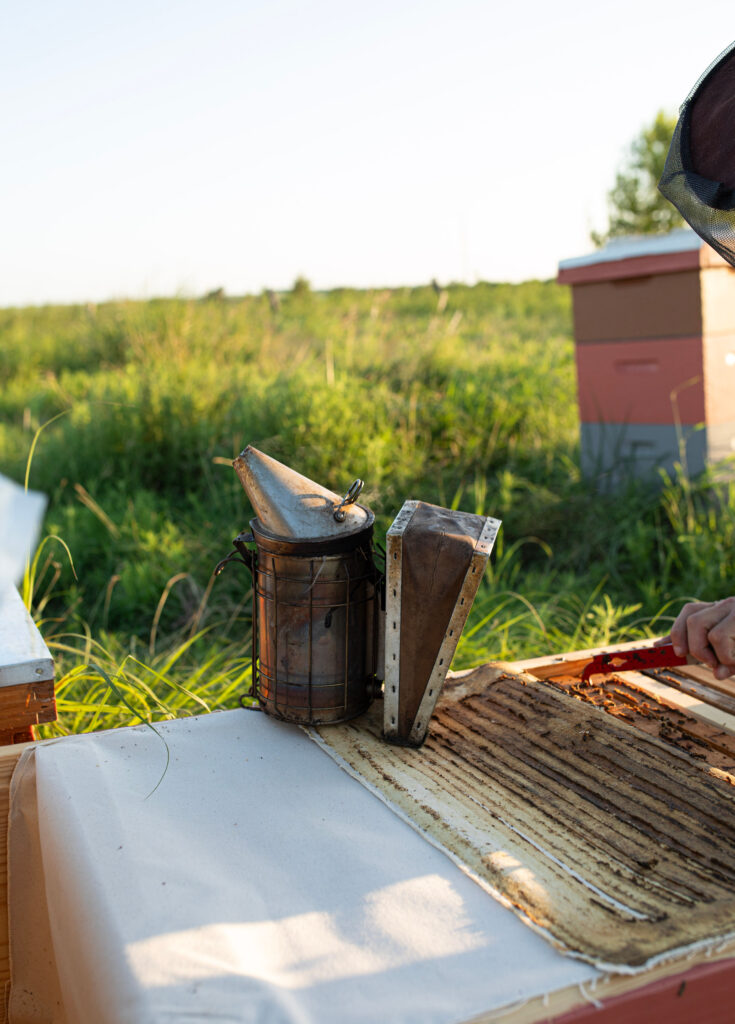
- Smoker and fuel: I use whatever is on the ground, yet if you’re in the part of Texas where the pines grow, I envy you
- Water source nearby: Shallow dish with rocks so they don’t drown
- Mite monitoring supplies: Alcohol wash kit or powdered sugar for checking mite levels
That’s about all you need to start. Notice what’s missing? Well yes bees of course but no synthetic medications, no complicated feeding systems, no harsh chemical treatments and no scrolling through the endless list of tools and gadgets on Amazon!
Another thing, keep a notebook too. I can’t stress this enough. You’ll forget. But your notes don’t. Go ahead and write down what you see. Write down all that you did, and what questions you may have. After a few years, those notes become invaluable for your natural beekeeping in Texas operation.
Finding Your First Bees
Why I Don’t Usually Recommend Package Bees
Most beginners buy package bees. Three pounds of bees in a screened box with a caged queen, shipped from somewhere far away. It’s easy. It’s available. But here’s what I learned about natural beekeeping Texas: those bees come from operations that treat heavily with synthetic chemicals. They haven’t developed the natural hardiness we’re trying to cultivate. And honestly, they can be quite traumatized from the move and often require a lot of nursing to get up and rolling.
Better Sources for Natural Beekeeping in Texas
Swarms:
I’ve built most of my apiary with swarms. They are a great way to continue your practice of natural beekeeping in Texas. When bees swarm, they only fly a short distance before stopping so you know they’re from your general area, climate and ecosystem. They are free, but it will take you time to get and then nurse to health and size. However, catching your first swarm is one of the most exciting experiences in beekeeping. Join local bee groups and get on swarm call lists. Many experienced keepers are happy to bring a beginner along.
Local treatment-free or minimal-treatment splits:
If you can buy nucleus colonies from a beekeeper who practices natural beekeeping Texas style like we do, like Raw-Bees, you’re getting genetics that have proven themselves. Yes, you’ll pay $200-300. But you’re investing in bees already adapted to Texas and to natural management.
Just start with two or three colonies. Not five. Not ten. And not one, which is what most people gravitate towards. Tho each colony is it’s own nucleus, maintaining its life on its own, you’re learning and new beekeepers loose colonies of bees. Experienced beekeepers loose bees. Yet having another colony right next to it enables you to make interventions to help save one that becomes weak with the other’s strong health.
The first few years all you need to do is observe, learn what you’re seeing and connected with your local beekeeping club. You need to develop your sense for what’s normal and what’s not. Beekeeping isn’t about managing numbers. It’s about understanding life happening in those boxes.
Setting Up Your First Apiary
Location Matters More Than You Think
I’ve moved hives around enough times to know that where you place them affects everything about natural beekeeping in Texas a success. Here’s what works in Central Texas:
Full sun or only evening shade:
Our summer afternoons are merciless.Yet small hive beetles are known to infest hives if they’re in the shade more hours than in the sun. If your bees are in full sun all day, they will spend a lot of their energy working to cool the hive yes, but that’s less detrimental to you and them than being overrun by small hive beetles. East or southeast facing works well for their entrance also, yet mainly just don’t point it north.
Wind protection without stuffiness:
Block the hard north winds in winter, but don’t put your hives where air can’t flow. Bees need ventilation and again, the more sheltered they are (shade and humidity) the higher risk of small hive beetles being a problem, and ants too.
Water close by:
Bees will find water up to a mile or more away. But if you have any tanks or creeks near your bees, they will be grateful for anything closer by. When my wife and I were rebuilding our old farmhouse, we lived in an old RV. The bees loved the condensation from the AC! It was fun to watch them from our windows. You can just use a bird bath with a rock in it for the bees to sit on. Fresh water near by makes the bees life a lot easier and even extends the life of the bee during the hot summer days. Just think, how would your legs feel if you had to fetch water 15 times a day? Would you want to walk 2 miles to get it each time or just 200 yards?!
Think about the flight path:
If you’re beekeeping in a neighborhood or small backyard this is a tip for you. Bees take off and then fly upward. So if you can position hives opining near a fence or hedge, they’ll gain altitude quickly and fly over people’s heads instead of through your backyard space.
Planting for Your Bees
This is where natural beekeeping really shines. You’re not just keeping bees. You’re creating habitat. Start planting now, before you even get bees.
Here’s a small list of natives that you can plant that really help out pollinators.
Spring in Central Texas:
- Texas mountain laurel (blooms February, sometimes earlier)
- Texas Sage
- Red Bud Tree
- Agarita (those yellow flowers the bees go crazy for)
- Mexican plum
- Bluebonnets and any/all of our native wildflowers (especially clovers and Horesmint)
Summer (the hard season):
- Sunflowers, different varieties for succession blooming
- Mexican hat
- Coneflowers (Echinacea)
- Turk’s cap (blooms even in drought)
- Dessert Willow
- Kidneywood (our favorite because it brings in SO many different pollinators)
- Praire Verbena
Fall (the second hard season):
- Frostweed
- Maximilian sunflower
- Gregg’s mistflower
- Fall asters
- Goldenrod
Here’s something I learned the hard way with natural beekeeping Texas: plant in drifts, not scattered individual plants. When bees find a good source, they recruit other bees to it. A big patch of one thing is more valuable to them than one plant each of twenty things scattered all over distances.

This is a great image of bees in the back of a Texas property. You can see the sunflowers and the mesquite tree as well as other Texas wildflowers that the bees love.
Your First Year: What to Expect Month by Month
Spring: When Everything Starts (March-May’ish)
First I want to say nothing about Texas weather or seasons can truly be expected. So take these monthly categories as very vague guidelines. I can’t emphasize it enough that each season and month is a play by play all determined by the previous seasons outcomes and current signs in the forage and not just a clockwork box to check.
March-April:
This is when you want to start your natural beekeeping Texas journey. Central Texas is warming up, flowers are blooming, and the bees are ready to build. Whether you caught a swarm or bought a nuc, installation is simple. Put them in their new home and step back.
I know you’ll want to check on them constantly. I did too. But here’s what I’ve learned: resist that urge. Look once a week at first, just to make sure the queen is laying and workers are building comb. Keep your inspections to ten to fifteen minutes maximum. You’re observing, not managing. If you caught a swarm it would be helpful to feed them 1-1 sugar to water ratio since they have no resources of their own to sustain their endless work to build up their home.
May:
By May, nectar should be kicking into high gear and your colony should be growing strong in numbers. Watch for signs of swarming: lots of drone comb, queen cells forming, the hive feeling crowded. If they swarm, half your bees leave with the old queen to find a new home. That’s natural. That’s what they’re designed to do. But it does set back your colony and reduces your honey harvest. If you want to prevent it, you can do what’s called making splits. You end up with two colonies instead of one, and you’ve prevented the swarm. Continuing to monitor their space is key as they will be growing in numbers and hopefully filling up all their frames with nectar they’re bringing in. You don’t want to lack in giving them extra space when needing.
Summer: The Testing Season (June-August)
Texas summer has taught me more about natural beekeeping than any book. When it’s 105 degrees and nothing’s blooming, you learn what really matters. But again, back to my first point, there has been times when our spring blooms have lasted almost through June and others that end within the first days of it. Learn to watch not just weather but the forage around as they’ll be your best input of wisdom.
Keep things cool:
Again, I believe heat is easier for them to regulate than fighting off small hive beetles from them being in the shade. That being said one step you can do to help is placing a scrap piece of metal on top of the hive to act as a shade barrier between the box and the sun. another is replace the wooden entrance reducer with a washable AC filter. This allows air flow while still shrinking their entrance to protect them from robbers.
Keep things cool:
Check your water sources daily in summer and don’t let it run out! They are habitual creatures. If the water source isn’t regular and dependable they won’t come. It’s worth even hooking up an automatic system if you have the means to.
Inspect early:
If you need to open a hive in summer, do it in the morning before the heat peaks. And be quick. Every minute that hive is open, you’re releasing the cool air they’ve worked all night to create. Plus the longer a hive is open during a period of little to no nectar flow, the higher your chances are at causing them to be attacked and robbed out by nearby hungry bees.
Consider emergency feeding:
This might surprise you from someone practicing natural beekeeping Texas, but if we’re in severe drought and your bees have no stores, sugar syrup can be the difference between a colony that survives and one that starves. I use 1:1 ratio in summer. The bees take it when they need it. This isn’t regular feeding, it’s emergency intervention, and there’s nothing natural about letting bees starve when you could prevent it. Typically I only do this to new colonies or recently removed bees that don’t have at least 1 full box of comb and bees inside.
Fall: Getting Ready (September-November)
September-October:
As temperatures drop into the 80s and 90s, we get our fall nectar flow. Goldenrod, asters, late sunflowers. This is when bees really pack in their winter stores. Check to make sure each colony has 50-80 pounds of honey. That sounds like a lot, but remember, Texas weather is unpredictable. I’ve had some eat only two frames of honey once (10-15lbs) while the following year colonies ate through an entire 8 frame box.
This is also when I check mite levels. If counts are high heading into winter, I’ll consider an oxalic acid treatment after brood rearing slows down. Going into winter with high mite loads is asking for trouble.
November:
Watch your colonies start to tighten up. Less activity. Smaller cluster. Reduce your entrance and replace the AC filter ones with wood to help them conserve heat. This helps them defend against robbing also (other bees trying to steal their honey) and makes the guard bees job easier and more successful.
Winter: The Quiet Time (December-February)
December-January:
Leave them alone. I know that’s hard. But winter is when you practice trust. The bees know what they’re doing better than we do. Don’t open hives unless it’s above 65 degrees and you have a real reason.
If you monitored mite levels in fall and they were concerning, winter broodless period is the ideal time for an oxalic acid treatment. It’s highly effective when there’s no capped brood for mites to hide in.
February:
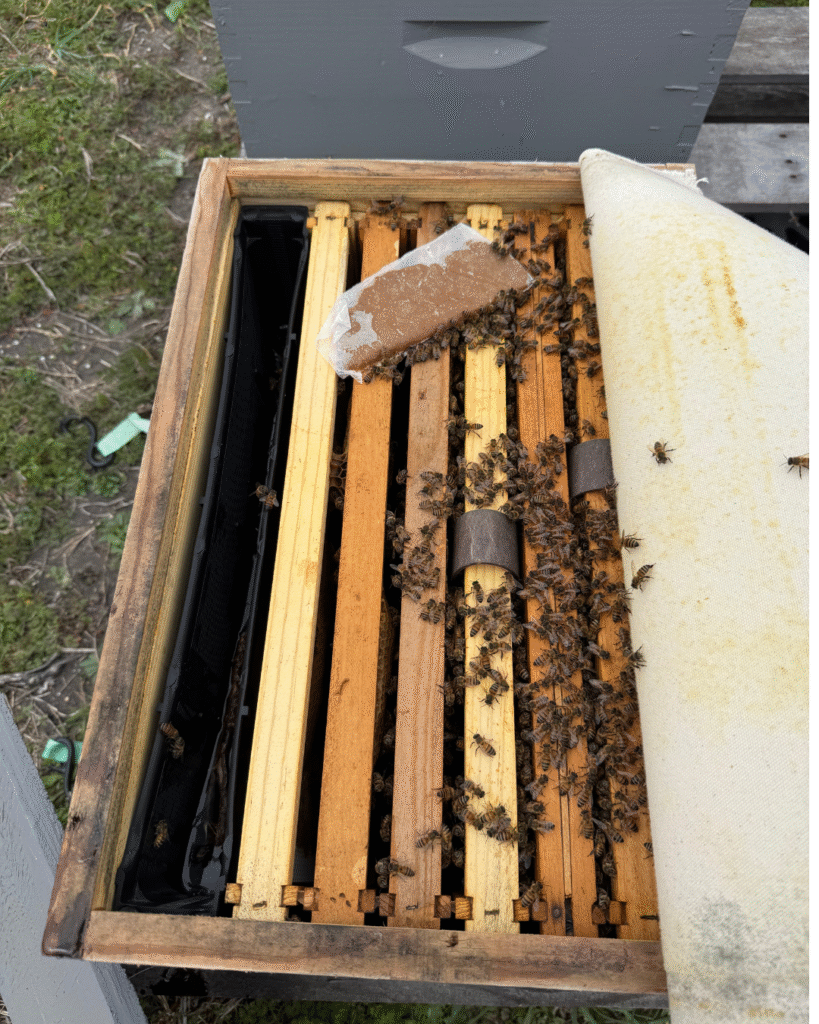
Late in the month, you’ll start seeing activity pick up. Check food stores on a warm day. They will need a lot of food in the coming month because the queen can sense spring is near so she will start laying more eggs and food needs will near double all while no flowers have started to bloom. If they don’t have adequate honey stores still, start feeding sugar bricks if it’s still below 55 at night. Make sure your colonies made it through. Start thinking about whether you’ll make splits when April arrives and if so, from which colonies.
Living With Varroa Mites Responsibly
The Biggest Challenge We Face
Varroa mites. Every beekeeper deals with them, conventional or natural. They’re parasites that feed on bee larvae and spread deadly viruses. Left completely unchecked, they’ll kill most colonies. That’s just reality in modern beekeeping.
The question isn’t whether varroa exists. It’s how we respond as stewards of these creatures God’s given us to care for.
Monitoring Is Essential
In natural beekeeping Texas, monitoring mite levels is the foundation of responsible management. I do alcohol washes when I’m really questioning a hives health but mostly by monitoring their appearance, brood pattern and hygienic behavior. This tells me what’s actually happening in my hives instead of guessing.
Threshold levels:
- Spring: 3% or more warrants attention (3 mites per 100 bees)
- Summer: 3-5% needs treatment consideration
- Fall: 2% or more is concerning heading into winter
- Winter: Monitor before and after any treatment
These aren’t rigid rules. They’re guidelines based on research and experience. Your situation might vary.
My Natural Treatment Approach
Here’s how I integrate minimal treatment into natural beekeeping Texas:
First line of defense:
- Small cell foundation size (4.9mm)
- Solid bottom boards
- Strong, well-fed colonies from good forage (not being honey greedy and leaving them extra for winter)
- Locally adapted genetics that show some mite resistance
When monitoring shows intervention is needed:
- Oxalic acid during winter broodless period or
- Applied only when mite counts exceed thresholds
- Never on a rigid schedule, always based on actual colony needs
Research shows no significant differences in adult bees, brood, or stored honey when colonies are exposed to oxalic acid, supporting that it’s safe for the colony Methods to Control Varroa Mites: An Integrated Pest Management Approach.
The goal isn’t zero mites. That’s impossible. The goal is keeping mite levels manageable while developing bees that can handle reasonable mite pressure naturally over time.
Why This Matters for Animal Welfare
I’ve watched colonies collapse from untreated varroa infestations. It’s not peaceful. The bees crawl out of the hive, deformed, unable to fly. The cluster dwindles day by day. The queen stops laying. Eventually, they’re gone.
Some say letting this happen is a form of natural selection. And there’s a little truth to that. But there’s also truth to the idea that we have a responsibility to the animals in our care. Some say bees in the wild handle mites just fine but if we play by those rules, then you would need to let your colony swarm anytime it wanted which could mean having multiple month long brood breaks a year. This will end in you having a small colony with trace amounts of honey going into winter.
For me, using minimal, naturally-occurring treatments when monitoring shows they’re needed is the balance point between natural methods and responsible stewardship. But again you’ll need to decide for yourself where that line is.
Other Pests You’ll See
Small hive beetles: Common in our humid areas. The good news is strong colonies handle them naturally. Bees chase them, trap them in corners with propolis, and keep their population in check. Weak colonies struggle. Keep your hives strong and in sunny spots.
Wax moths: Only a problem in weak or dead colonies. If your colony is healthy, you’ll never see moth damage. If you’re storing empty comb, freeze it for 48 hours, then keep it sealed or under light and fan.
Finding Your Community and Keep Learning
Resources That Have Helped Me
Nobody figures out natural beekeeping Texas alone. Here’s what’s been valuable in my journey:
Books worth reading:
- “The Thinking Beekeeper” by Christy Hemenway
- “Natural Beekeeping” by Ross Conrad
- “Keeping Bees With a Smile” by Fedor Lazutin
Online resources:
- Treatment-free forums where people share real experiences
- Scientific Beekeeping by Randy Oliver (Word to the wise, this is the BEST all encompassing post about all things beekeeping. Soak up the great knowledge)
- Texas A&M AgriLife Extension has good Texas-specific information
Local connections matter most:
- Join your regional beekeeping association
- Find natural beekeeping Texas meetups if they exist in your area
- Connect with beekeepers who’ll answer questions honestly
Finding a Mentor
I can’t overstate how valuable it is to have someone you can call when things go wrong. And things will go wrong. Look for beekeepers practicing natural beekeeping in Texas. Most of us are happy to help beginners because we know what it was like not knowing what we were looking at, we still have to call one another for a new thing we’re learning about.
I teach classes, and I have a six month internship that take a “new-bee” from the start of bee season in march all the way to then end of harvest in September.
But also talk to conventional beekeepers. Listen to why they do what they do. You’ll learn something from every experienced keeper, whether they manage like you or not. The beekeeping community is so generous with all of their knowledge and almost everyone is excited to share what they know with anyone that asks.
Mistakes I Made So You Don’t Have To
Opening Hives Too Much
My first year with natural beekeeping in Texas, I was in those hives every few days. I thought I was being thorough. But really, I was just stressing the bees and satisfying my own curiosity. Every time you open a hive, you’re disrupting everything they’ve carefully arranged. You’re breaking the propolis seal and climate control they’ve worked to maintain. And you risk injuring or killing the queen.
If your colony is new to your area or the hive you put them in, like a swarm or package, start with weekly inspections until you see them starting to build comb. Then back off to every two or three weeks once they’re established. But in general, less is more in any realm or style of beekeeping and if you learn correctly you can eliminate almost half the times you want to go investigate them by simply watching the outside for 20 minutes.
Not Monitoring Mites
Early on, I thought avoiding treatments meant avoiding monitoring. That was foolish. You need to know what’s happening in your hives. Monitoring isn’t intervention. It’s information. And information helps you make wise decisions about when intervention might be necessary for colony welfare.
Inadequate Record-Keeping
I thought I’d remember, but of course I didn’t.
Start a notebook or a simple spreadsheet. Have the date, weather, what you saw, mite counts, what you did, and be sure to have a section in there for noting the forage and blooms nearby. After a year or two, patterns emerge that you’d never catch otherwise. This is especially important in natural beekeeping in Texas.
Buying Everything at Once
The beekeeping supply catalogs make everything look essential. But really, it’s not. Just start with the basics. Add things as you discover what your actual needs are through your experiences. One of the best things about Natural beekeeping is about simplicity. Your equipment should reflect that philosophy.
What to Actually Expect Your First Year
Honey Harvest Reality
People start natural beekeeping in Texas dreaming of jars and jars of honey. I understand that, I mean why else would you start beekeeping? But let me set a more realistic expectations for your first year: you probably won’t harvest any honey. Even if your hive did wonderfully I still advise people to not take any honey the first year and leave it all for the bees.
Your bees need that honey. They’re building comb, raising brood, storing food for winter. Taking their surplus before they’re established and before you’re fully educated and aware of their seasonal cycle is asking for trouble.
More realistic timeline:
- Year one: Focus on keeping them alive, not on harvesting
- Year two: Make sure to leave them 60lbs (nearly full 8 frame deep box) and then harvest the rest
- Year three and beyond: However much you wish to harvest knowing if you take it all, you’ll need to frequently feed them
This isn’t about production. It’s about building sustainable colonies that’ll be here in ten years. That takes patience with natural beekeeping.
Colony Losses Will Happen
Even with responsible mite management, you’ll lose colonies. Especially in the beginning. Sometimes queens fail, a hive gets robbed out. There will bee times you miss warning signs. Sometimes colonies just don’t make it despite your best efforts.
I’ve lost colonies. Every beekeeper has. It hurts every time. But it’s part of the learning process. What matters is what you learn from each loss and how you apply that knowledge moving forward.
With the approach I use, minimal intervention with naturally-occurring treatments when monitoring shows they’re needed, my survival rates have improved significantly over completely treatment-free methods. But I’m still learning, still adjusting, still trying to find that balance between letting bees be bees and being a responsible steward.
Time Investment
Beekeeping takes a lot of time and effort. Just as much time as you spend in the hive you’re spending also elsewhere in the shop building boxes! I won’t say any style of beekeeping is quick and easy. However, natural beekeeping actually requires less active management time than conventional methods ONCE YOU”RE ESTABLISHED and confident with their life and work cycle. If I had just a few hives to care for, here’s the time I spend working inside their hive:
- Spring: Two to Four hours a month during swarm season
- Summer: One to two hours per month, plus mite monitoring/alcohol washes (20 min per hive)
- Fall: Hour or two per month, including mite checks/treatments
- Winter: Half hour per month, mostly watching from a distance, maybe one treatment or occasional feeding
Compare that to rigid treatment schedules, constant feeding and multiple synthetic chemical applications. Natural beekeeping Texas style means less time working bees and more time observing them. That suits me fine. But again, I don’t want to create false expectations and getting to this point takes time. A huge saver of time is getting your bees healthy and established and full of locally sourced honey and pollen so they have adequate stores to pull from if/when needed.
Growing Your Operation Naturally
When You’re Ready to Expand
After a year or two, if you’ve got colonies that are thriving with your natural beekeeping Texas approach, you might want to grow. Here’s how I’ve done it:
Making splits: Early spring, right before or just when the main nectar flow starts, divide strong colonies. You end up with two from one, and you’ve prevented swarming. Both colonies have time to build up before summer.
Catching swarms: I’m still on swarm call lists years later. Every swarm is an opportunity for free, locally-adapted bees suitable for natural beekeeping Texas.
Buying from like-minded keepers: When I find someone who practices natural beekeeping Texas methods similar to mine, minimal intervention with naturally-occurring treatments when needed, I’ll buy splits from them. That introduces new healthy genetics while keeping the chemical-free approach. It’s important to see the long term goal benefit of this. Over time your hope is also to saturate your area with healthy genetics, swarms and drone bees (Male bees that mate with new queens) The longer you keep a healthy stock, the healthier your surrounding area and wild bees become also, who are mating with your new queens/splits. (Think like herd mentality of health)
Raising queens: Advanced skill, but once you know which colonies are performing best with minimal intervention, raising queens from them accelerates the whole process of developing locally-adapted genetics.
Staying True to the Principles
As your apiary grows, it’s tempting to compromise. One synthetic treatment won’t hurt, you’ll think. Just this once.
But here’s what I’ve learned with natural beekeeping Texas: every time you intervene with synthetic chemicals, you’re selecting for bees that need synthetic chemicals. You’re undoing the work of building resilient genetics.
Stay consistent. Focus on colony health, not honey production. Monitor responsibly. Intervene minimally with naturally-occurring tools when animal welfare demands it. Let natural behaviors happen. Keep planting native flowers. And keep learning.
Final Thoughts
Natural beekeeping Texas style has taught me more than just how to keep bees. It’s taught me patience, and it’s taught me that sometimes the best thing you can do is nothing. It’s taught me that loss is part of life, and that we don’t have as much control as we’d like to think.
Your first year will be challenging.
You’ll question your decisions, you’ll wonder if you should just treat the mites. You’ll stand in front of a struggling colony and feel helpless. I’ve been there. Most treatment-free beekeepers have.
But you’ll also experience something profound. You’ll watch bees build perfect comb without your intervention, and see a colony survive winter without any help from you. You’ll harvest honey that’s completely free of chemical residues. And you’ll know you’re working toward something sustainable, something that honors how these creatures were designed to live.
Connect with other beekeepers
Both treatment-free and conventional. Learn from everyone. Stay humble. Keep detailed notes. And remember that this is a journey measured in years, not months.
The colonies you’re establishing today, if they make it, will form the foundation of bees that can truly thrive in Central Texas without constant human intervention. That’s worth pursuing, even when it’s hard. Especially when it’s hard.
At Respite Bee Farm, we see this work as stewardship.
As caring for something God created with wisdom we’re only beginning to understand. Whether that resonates with you or not, I hope you’ll approach your bees with that same sense of responsibility and reverence.
Welcome to natural beekeeping. The bees are waiting to teach you.