Understanding Bell County Bee Removal: A Gentle, Humane Approach
When you discover thousands of bees have made a home in your walls or attic, your first instinct might be fear—or reaching for the phone to call an exterminator. I understand that reaction. But here’s what I’ve learned after years of working with honeybees in Central Texas: there’s a better way, one that protects both your family and these remarkable creatures God designed to sustain our ecosystem.
At Respite Bee Farm, we approach Bell County bee removal as an act of stewardship. Every colony we relocate is an opportunity to restore balance—removing bees safely from where they don’t belong and giving them a new home where they can thrive and continue their essential work as pollinators.
Why Honeybees Choose Your Home
Honeybees are looking for the same things we are: shelter, security, and a place to raise their young. Your home’s wall cavities, attic spaces, and chimney flues can look remarkably like the hollow trees they’d naturally choose in the wild. The stable temperature, protection from weather and predators, and dark, enclosed space make these spots ideal for colony building.
Here in Central Texas, our warm climate and abundance of flowering plants create perfect conditions for bees year-round. Spring and early summer are particularly active times, when colonies swarm to establish new homes. A single swarm can contain 10,000 to 30,000 bees, and their scout bees are remarkably good at finding entry points—sometimes gaps as small as a quarter-inch.
Over the years, I’ve found colonies in:
- Wall cavities between studs
- Attic spaces and soffits
- Chimneys and fireplace dampers
- Old tree stumps or logs on the property
- Utility boxes and meter housings
- Playground equipment and storage sheds
[INSERT IMAGE HERE]
Image Alt Text: Bell County bee removal specialist using thermal imaging to locate honeybee colony in residential wall cavity
Image File Name: bell-county-bee-removal-thermal-imaging.jpg
The Assessment: Understanding What We’re Working With
Every Bell County bee removal begins with careful observation. I typically spend 30 to 60 minutes just watching and listening, trying to understand what the bees are telling me about their colony.
The first question is always: what kind of bees are we dealing with? Honeybees require live removal and relocation. Africanized honeybees—which we do encounter in Central Texas—demand extra safety precautions and different timing. Carpenter bees and bumblebees need their own specific approaches.
Next, I need to locate the hive and estimate the colony’s size. This is where thermal imaging cameras become invaluable. Rather than cutting into walls blindly and causing unnecessary damage, we can see the heat signature of the cluster through the structure. It’s a tool that’s transformed how we approach this work—less destructive, more precise.
I also assess what it will take to access the colony—how much siding, drywall, or roofing we’ll need to remove, and what the repair process will look like. Then we develop a plan that balances three priorities: your family’s safety, preserving your home’s structure, and caring for the bees themselves.
The Live Removal Process: Patient and Purposeful
Live bee removal isn’t quick work, and it shouldn’t be. Here’s how we approach it:
Preparation and Safety
Before we begin, everyone’s safety comes first. We suit up in protective gear—full suits, veils, and gloves. The work area is secured, and we make sure family members and pets stay safely indoors. If we’re working with Africanized bees, we time the removal for cooler parts of the day when they’re naturally less defensive.
Accessing the Colony
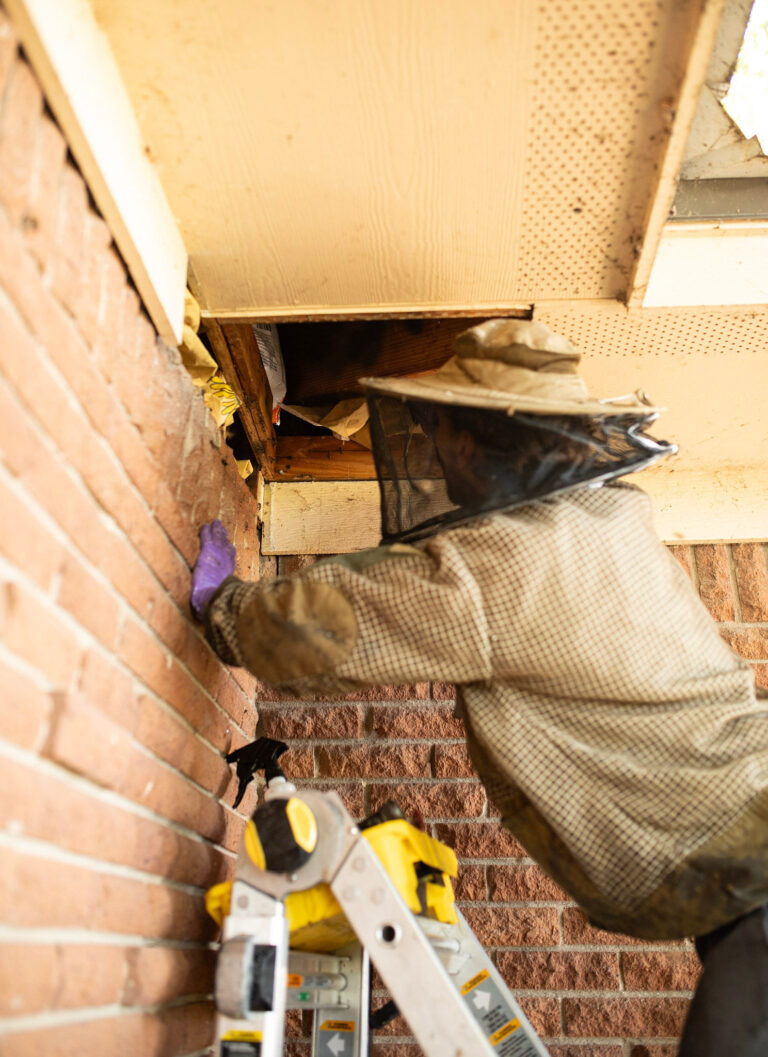
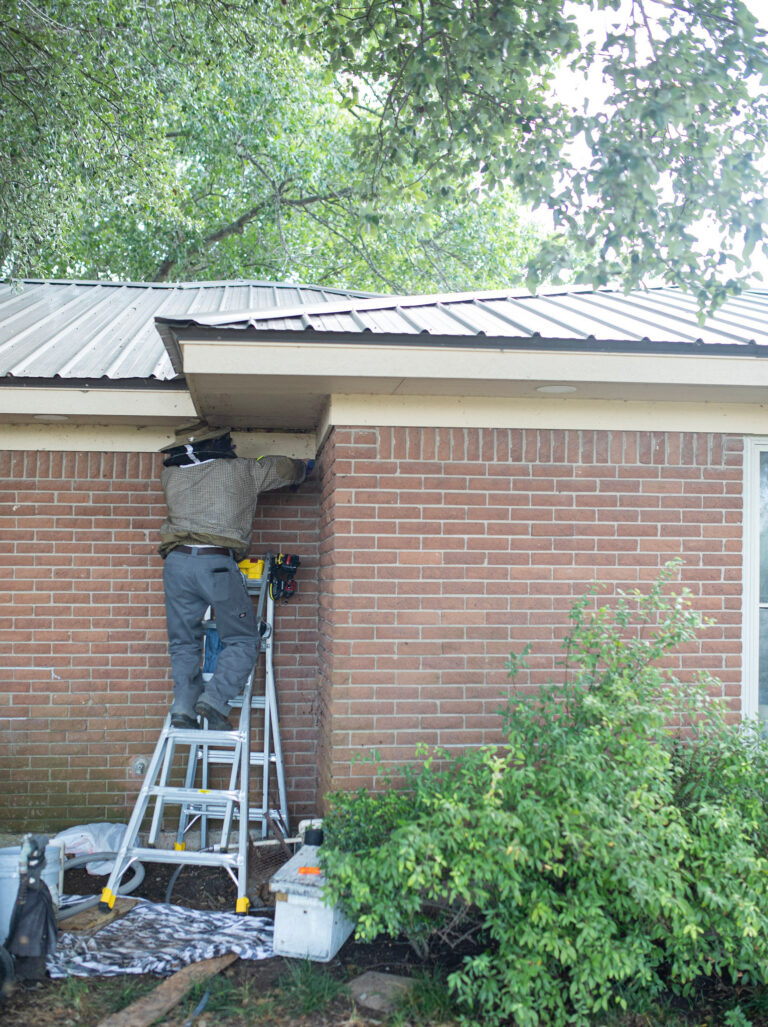
This is often the most delicate part. We might remove sections of siding, cut into drywall, or take apart soffits or roofing. I work carefully to minimize damage, and we coordinate closely with trusted contractors to ensure repairs are done right. Your home deserves that respect.
[INSERT IMAGE HERE]
Image Alt Text: Bell County bee removal process showing careful wall access to reach established honeybee colony
Image File Name: bell-county-bee-removal-wall-access.jpg
Removing the Bees and Comb
The bees themselves are vacuumed gently into specialized collection chambers designed to keep them safe. The key moment is capturing the queen—once we have her, the colony will follow.
Then comes the comb removal, and this is critical work. Every bit of honeycomb, honey, and brood must come out. I’ve seen what happens when this step is rushed or skipped: the remaining honey ferments, attracting ants and other pests. Wax melts in the summer heat, causing stains and damage. And the pheromones left behind? They’re like a “vacancy” sign for the next swarm that passes through. Complete removal prevents all of this.
[INSERT IMAGE HERE]
Image Alt Text: Complete honeycomb extraction during Bell County bee removal showing professional technique
Image File Name: bell-county-bee-removal-honeycomb-extraction.jpg
Relocation and New Beginnings
The colony is transported to an apiary—often right here at Respite Bee Farm—where they’re introduced to a standard hive setup. We monitor them closely, provide supplemental feeding if needed, and watch as they settle into their new home. These relocated bees go on to pollinate crops and gardens, produce raw Texas honey, and contribute to the health of our local ecosystem.
[INSERT IMAGE HERE]
Image Alt Text: Rescued honeybee colony thriving in Central Texas apiary after humane Bell County bee removal
Image File Name: bell-county-bee-removal-relocated-colony.jpg
Why This Approach Matters
I believe honeybees are part of God’s design for creation’s abundance. They’re not just insects—they’re keystone pollinators that support both agriculture and wild plant communities across Central Texas. Without them, we’d lose not just honey, but the pollination services that help produce cucumbers, melons, squash, and countless other crops. Nationally, honeybees contribute roughly $15 billion annually to agricultural production.
But it goes beyond economics. When we relocate a colony, those bees help pollinate native Texas plants—bluebonnets, black-eyed Susans, wildflowers that support entire ecosystems. Each removal and relocation is a small act of restoration, an investment in biodiversity and the health of our land.
There are practical considerations too. Many municipalities and insurance companies now favor humane removal methods. And organizations like the Texas Beekeepers Association actively advocate for conservation-minded practices. This is becoming not just the right way to handle bees, but the expected standard.
After the Removal: Protecting Your Home Long-Term
Our work doesn’t end when the bees are relocated.
Exclusion Work
We seal every entry point carefully—using steel wool, metal mesh, or expanding foam depending on the location. Vents get properly screened. Utility gaps are sealed. Chimney caps are installed if needed. The goal is simple: no more bees moving in.
[INSERT IMAGE HERE]
Image Alt Text: Professional exclusion work completed during Bell County bee removal showing properly screened vent
Image File Name: bell-county-bee-removal-exclusion-work.jpg
Structural Repairs
Any siding, drywall, insulation, fascia, or soffits we removed are restored to their original condition. We work with skilled contractors who understand the importance of doing this right.
Monitoring and Warranty
We stand behind our work. Depending on the scope of the job, warranties typically range from 30 days to a year, ensuring that if bees attempt to return, we’ll address it at no additional cost.
Choosing the Right Bell County Bee Removal Service
Here’s what I’d encourage you to look for:
Experience and Qualifications
You want someone trained in live bee removal who understands Texas species, particularly how to work safely with Africanized bees. Licensing and insurance matter too—this protects both you and the professionals doing the work.
Humane, Faith-Informed Practices
Look for services that prioritize live removal and partner with local beekeepers. At Respite, this is central to who we are—we see this work as ministry, not just business.
Complete Service
From inspection through removal, exclusion work, repair coordination, and warranty coverage, you want a team that sees the job through from start to finish.
Investment and Value
Every situation is unique, and honest pricing starts with understanding what we’re actually dealing with. A simple swarm collection—catching bees before they’ve established comb—typically runs around $150. If we need to cut into structures to remove an established colony, prices start at $250 and go up from there depending on the complexity of the work.
Here’s how I approach pricing: after the initial assessment, I’ll give you a ballpark estimate based on what I can see—the size of the colony, how much structural work is involved, and what exclusion and repair will require. I want you to know what you’re looking at before we begin any work. No surprises, no hidden costs.
Yes, it costs more than extermination. But extermination doesn’t remove the honeycomb, doesn’t seal entry points, and often leads to recurring problems down the road. Live removal, done right the first time, is an investment that solves the problem permanently while honoring creation.
Why DIY Bee Removal Is a Risk You Shouldn’t Take
I know the temptation to handle this yourself—it seems like it should be straightforward. But here’s what I’ve learned from years of experience:
The safety risks are real. Bee stings can be dangerous, especially if you’re working with Africanized bees or if anyone in your household has allergies. Without proper equipment and training, you could put yourself and your family at risk.
Incomplete removal is almost guaranteed. Trapping bees without removing comb, or leaving honey and wax behind, creates problems that are often worse than the original infestation.
Structural damage can escalate quickly when you don’t know exactly where the colony is or how to access it properly.
And insurance issues can arise—some policies won’t cover damage from DIY removal attempts.
This is work that deserves professional care, for everyone’s safety and peace of mind.
When to Call for Emergency Bell County Bee Removal
Some situations require immediate attention:
- Aggressive behavior from the colony
- Large swarms in high-traffic areas where family members walk daily
- Bees actively entering your living spaces
- Anyone in the household with bee sting allergies
If you’re seeing any of these signs, don’t wait. Reach out to us right away.
Supporting God’s Creation Through Bee Conservation
Every colony we relocate at Respite Bee Farm continues its God-given purpose:
- Pollinating crops and gardens throughout Central Texas
- Producing raw, local honey and beeswax for our community
- Serving as living classrooms for our beekeeping education programs
- Contributing to research on bee health and sustainable practices
Each relocation is a small act of stewardship—caring for creation while solving a problem for a family who needs help.
Moving Forward Together
Discovering bees in your home doesn’t have to mean choosing between your family’s safety and environmental responsibility. Professional Bell County bee removal offers a path forward that honors both.
At Respite Bee Farm, we’re here to help. Whether you’re dealing with an active colony, want to prevent future infestations, or simply want to learn more about living in harmony with the bees that share our Texas landscape, we’d be honored to serve you.
This is more than pest control. It’s an opportunity to participate in something bigger—the restoration and stewardship of the land we’ve been given to care for. And that’s work worth doing right.
Ready for Humane Bell County Bee Removal?
Contact Respite Bee Farm today for a free assessment. We’re a family-operated beekeeping ministry committed to gentle, regenerative practices that honor both your home and God’s creation.
[Call us at: YOUR-PHONE-NUMBER]
[Email us at: YOUR-EMAIL]
[Schedule a consultation: LINK-TO-CONTACT-PAGE]
Serving Bell County and surrounding Central Texas communities with Christ-centered, humane bee removal and relocation services.
INTERNAL LINKING INSTRUCTIONS
Add these internal links where indicated in the text above:
- “Respite Bee Farm” (1st paragraph) → Link to: Home/About page
- “raw Texas honey” (Relocation and New Beginnings section) → Link to: Products/Honey page
- “ministry, not just business” (Humane, Faith-Informed Practices) → Link to: Mission/About page
- “Reach out to us” (When to Call section) → Link to: Contact page
- “raw, local honey and beeswax” (Supporting God’s Creation) → Link to: Products page
- “beekeeping education programs” (Supporting God’s Creation) → Link to: Classes/Education page
IMAGE CHECKLIST
□ Image 1: Thermal imaging (after “Why Honeybees Choose Your Home”)
□ Image 2: Wall access during removal (after “Accessing the Colony”)
□ Image 3: Honeycomb extraction (after “Removing the Bees and Comb”)
□ Image 4: Relocated colony in apiary (after “Relocation and New Beginnings”)
□ Image 5: Exclusion work/screened vent (after “Exclusion Work”)