Bee Removal in Bell County, TX: How to Find a Humane Bee Removal Service
You walk out to the porch and notice a steady line of bees slipping into a gap near the roofline. Or maybe there’s a fist-sized cluster hanging from the your favorite tree in the front yard, or a low hum coming from inside the shed wall. Either way, the same question hits google fast: “bee removal near me”

If you need bee removal in Bell County, Texas, the right next step depends on what kind of bees you have and where they are. This guide walks through what to do first, how to tell a swarm from a hive, and how to find a beekeeper who can help. If you’d rather talk it through now, you can contact Respite Bee Farm about bee removal and describe what you’re seeing.
Need Bee Removal in Bell County, Texas?
A local beekeeper can look at your situation, figure out what kind of insect you’re dealing with, and tell you whether the bees can be removed alive. That last part matters to a lot of people, but unfortunately that isn’t always possible, which we’ll get to below.
Local knowledge helps. Someone who works with bees across Central Texas understands our heat, our seasons, and the kinds of buildings and trees where colonies tend to settle. They also know the difference between a cluster of bees that will move on by itself and a colony that has built comb inside your wall.
Respite Bee Farm is a family operated beekeeping business in Central Texas that does live bee removal and relocation. If you have bees on your property, reach out and tell us what you’re seeing.
What Should You Do When You Find a Beehive?
Take a breath. Most of the time there’s no emergency, and the best thing you can do is leave the bees alone. Here’s what helps:
- Keep kids and pets away from the area.
- Don’t spray, swat, or block the entrance. Killing a colony inside a wall leaves behind wax and honey that can melt, leak, and draw pests.
- Watch from a safe distance and note where the bees are going in and out.
- Take a photo or short video only if you can do it from far away without getting close.
- Contact a bee removal professional.
Be more careful if the bees are near a front door, a walkway, or a play area, or if anyone in your home has a known severe sting allergy. In those cases, use a different entrance and call for help soon. If anyone is stung and has trouble breathing, swelling of the face or throat, or dizziness, call 911 right away.
Please don’t climb a ladder or open a wall to get a better look. That’s how people end up getting stung many times.
Swarm of Bees or Established Beehive? Know the Difference
A swarm is a group of honeybees that left their old hive with a queen and is resting somewhere while scouts look for a new home. It often looks like a ball or beard of bees hanging from a branch, fence, or eave. Swarms are usually temporary, lasting hours to a few days, and they can often be collected with less disruption.
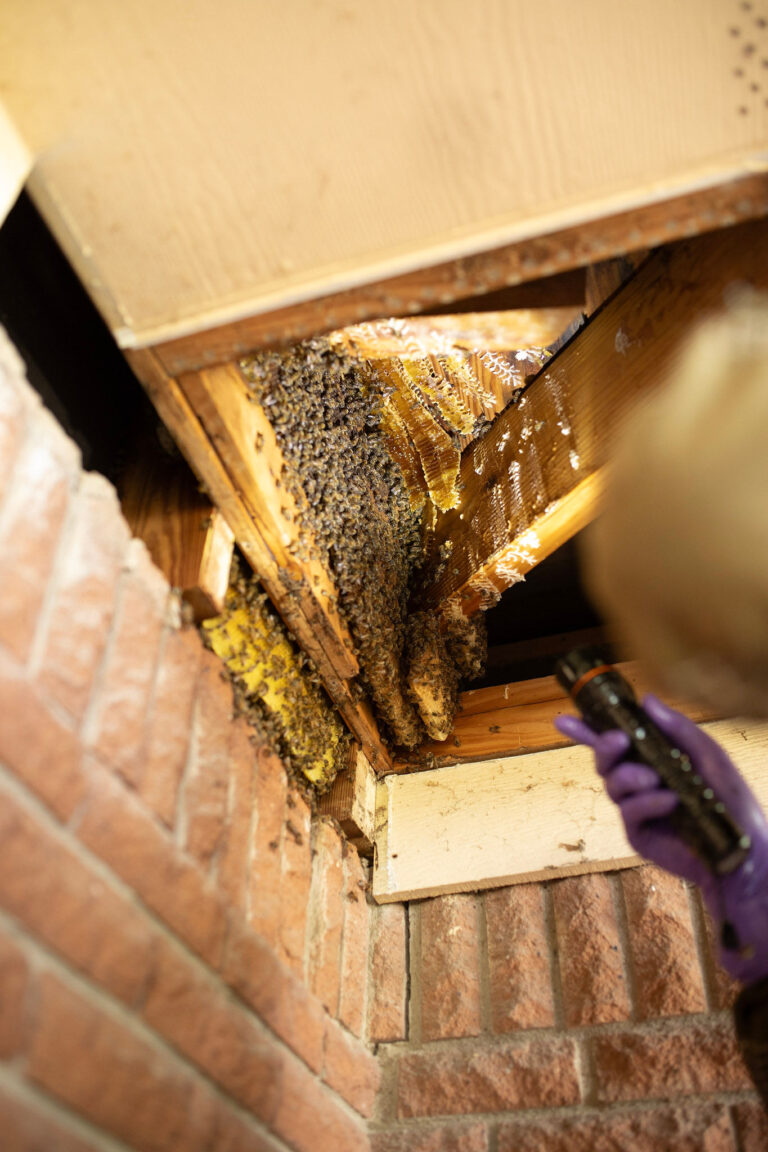
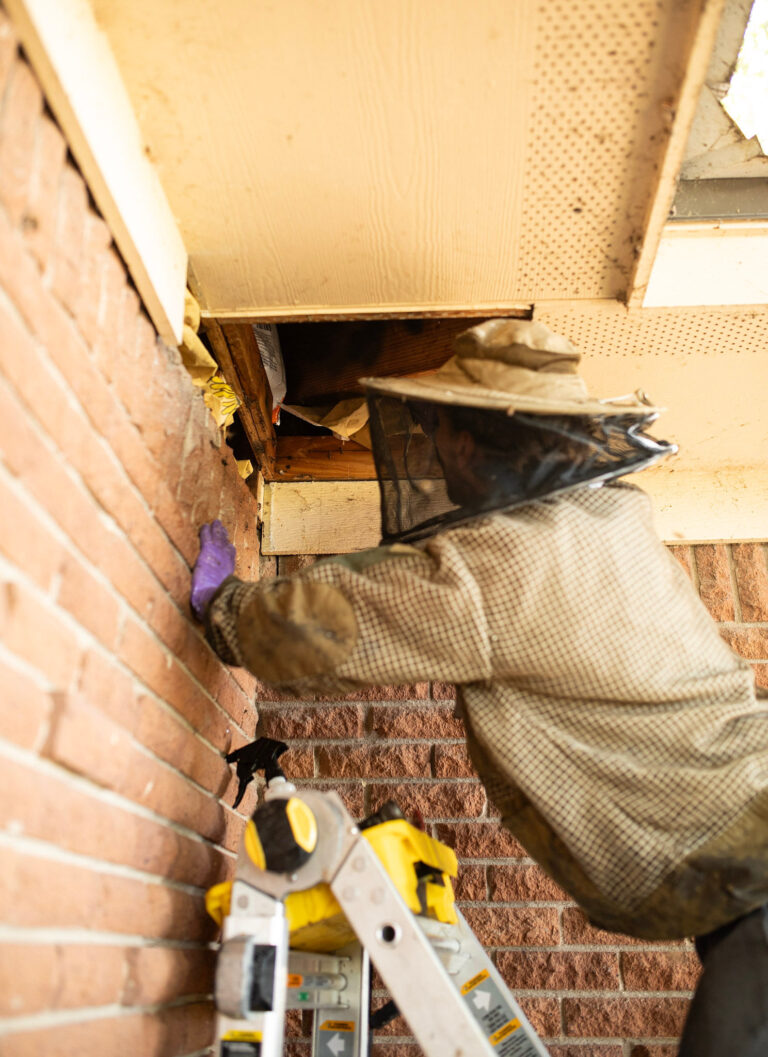
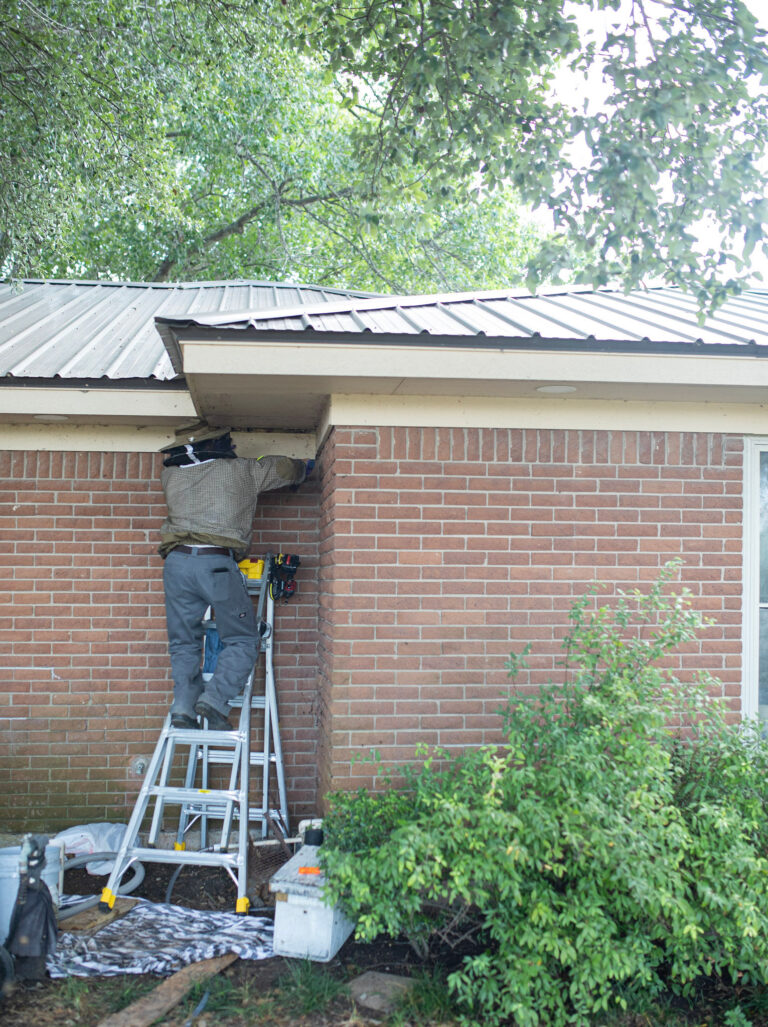
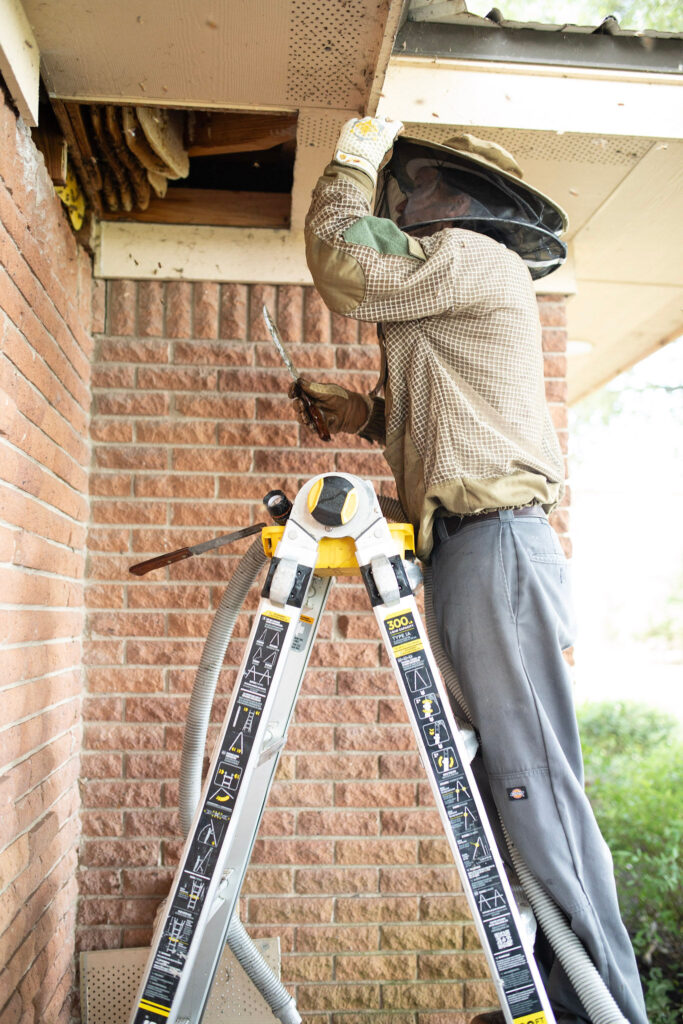
An established colony has already moved in. You’ll usually see bees traveling steadily to and from one small opening in a wall, roof, soffit, tree cavity, or shed. Inside, they’ve built comb and stored honey. Removing a colony from a structure is more involved. It can mean opening part of the wall, removing the comb and honey, and sealing the space afterward so another colony doesn’t move in.
One more thing: not everything that looks like a honeybee is one. Bumblebees, solitary bees, and wasps all get mistaken for honeybees. Photos from a safe distance help a beekeeper identify what you have before they decide how to handle it.
Humane Bee Removal vs. Extermination
Humane or live bee removal means a beekeeper carefully relocates a healthy honeybee colony instead of killing it. Many people prefer that, especially since honeybees are valuable pollinators. If you’ve been searching for a “no-kill bee exterminator near me,” a beekeeper who does live removal is usually the right kind of professional to look for.
It’s worth being honest about the limits, though. Live removal isn’t possible in every situation. It depends on the type of insect, where the bees are, how safely they can be reached, and the condition of the colony. Some situations call for a different professional or a different approach, and a good beekeeper will tell you that up front instead of promising something they can’t deliver.
It also helps to know that a beekeeper who specializes in honeybees may not handle wasps, hornets, or bumblebees. Ask before you book.
How to Find and Contact a Beekeeper for Bee Removal
Texas doesn’t have a state license specific to bee removal, so it pays to ask a few questions before you hire anyone. A good bee removal professional should:
- Explain clearly what kind of removal they do and whether live removal is realistic for your situation.
- Have experience with your type of job, especially if the bees are inside a building.
- Talk through access, any needed repairs, and follow up work.
- Give you clear information on fees, travel charges, and scope before they start.
- Be upfront about timing and what results to expect.
When you reach out to Respite Bee Farm, here’s what to include:
- Your location or ZIP code in or near Bell County
- Where the bees are: tree, wall, roof, shed, barn, or something else
- Whether you see a swarm or bees repeatedly going in and out of one opening
- About how long the activity has been going on
- Whether the bees are near a door, walkway, kids, pets, or someone with a severe allergy
- Photos taken from a safe distance, if you have them
- Any deadline or access issue, like a locked gate or a closing date on a house
Quick checklist before you call:
- I know roughly where the bees are entering
- I’ve kept people and pets away from the area
- I haven’t sprayed or sealed anything
- I have a photo or two from a safe distance
- I know my address and best way to be reached
These details help a beekeeper figure out the next step, but photos alone usually can’t confirm a diagnosis or a final quote. Ready to start? Contact Respite Bee Farm and share what you have.
How Much Does Bee Removal Cost?
There isn’t one price, because every job is different. The things that move the cost most are how easy the bees are to reach, whether they’re in a tree or inside a structure, how much labor is involved, how far the beekeeper has to travel, and whether the job includes removing comb or repairing and sealing the opening afterward. A swarm hanging low in a tree is a very different job from a colony built into a second story wall.
The best way to get a real number is to describe your situation and request an assessment and estimate.
Why Choose a Local Beekeeper for Bee Removal?
A beekeeper who removes bees for a living understands the bees, the building, and the risks. The things worth looking for are straightforward: honest communication, careful handling, a focus on safety, and realistic expectations.
Respite Bee Farm is a family operated regenerative beekeeping business in Central Texas. We also are a young family ourselves, we understand how unexpected bees can bee can be. When we price our removals, we want to be fully honest and realistic. We would rather explain what’s possible and what isn’t than overpromise.
Frequently Asked Questions About Bee Removal in Bell County
Who should I call to remove a beehive?
Start with a beekeeper who does live bee removal, especially if you want the bees saved. If the insects turn out to be wasps or hornets, you may need a different kind of pest professional.
Can a beekeeper remove bees without killing them?
Often, yes. A beekeeper can usually relocate a healthy honeybee colony alive, but it depends on the species, location, and safety of the situation.
Is a bee swarm dangerous?
Swarming bees are generally focused on finding a new home, not on stinging, but they can still defend themselves if disturbed. Keep your distance and keep kids and pets away.
How do I find a no-kill bee exterminator near me?
Look for a local beekeeper who offers live removal and relocation rather than extermination. Ask how they handle your specific situation.
Can bees be removed from inside a wall?
Yes, it’s a common job, but it takes more work than collecting a swarm. It often involves opening the wall, removing the comb, and sealing the space.
How much does bee removal cost in Bell County, Texas?
It varies with access, location, labor, and repairs. Request an assessment for a real estimate.
Should I spray the bees before the beekeeper arrives?
No. Spraying can leave a mess of dead bees, honey, and wax inside a wall and can make the job harder.
What should I do if bees are near my front door?
Use another entrance, keep people and pets away, and contact a professional soon. If someone has a severe allergy, don’t wait.
Does a beekeeper remove wasps and bumblebees, too?
Not always. Many beekeepers focus on honeybees, so ask before you schedule.
What to Do Next
If you’ve found bees on your property in Bell County, don’t spray them and don’t try to handle it yourself. Keep your distance, gather a few details and photos, and reach out. Contact Respite Bee Farm to talk through what you’re seeing and what the next step looks like.