Qualify Your Land in Waco:How Beekeeping Earns the McLennan County Ag Exemption, and How We Help
If you own land near Waco, the McLennan County ag exemption through beekeeping could significantly reduce your property tax bill. At Respite Bee Farm, we install and manage hives for landowners across McLennan County who want to qualify without becoming beekeepers themselves. More and more, after a phone call, we’re driving out to look at someone’s land — because this is something we can actually help with.
This guide covers exactly what McLennan County requires, how the timeline works, and how Respite can help you get there.
What Is the McLennan County Ag Exemption — and How Does Beekeeping Qualify?
Most people call it the “ag exemption.” The appraisal district calls it the 1-d-1 Open-Space Agricultural Valuation. The difference matters when you’re talking to MCAD. It is not a true exemption — your land stays on the tax rolls. However, instead of being taxed at market value, your property gets appraised based on its agricultural productivity value. Because land prices around Waco have climbed steadily, the gap between market value and productivity value can be substantial. That’s where the savings come from when you qualify for the McLennan County ag exemption.
The legal foundation is Texas Tax Code, Chapter 23, Subchapter D, Section 23.51. In 2012, beekeeping was added as a qualifying agricultural use. Because of that change, smaller tract landowners who can’t run cattle or hay on their acreage now have a legitimate path to the exemption.
To qualify, your land must be used to raise or keep bees for pollination or for the production of honey, beeswax, or other products with commercial value. Importantly, you do not have to sell anything. You simply have to produce it — and document that you did.
“The qualification is tied to the land, not to the landowner. That distinction matters more than most people realize.”
McLennan County Ag Exemption Requirements for Beekeeping
The state sets the framework, but the McLennan Central Appraisal District (MCAD) sets the specific standards for how that framework gets applied locally. Their guidelines were updated in 2024. Always confirm the current requirements directly with MCAD, but here is a clear summary of what they expect.
MCAD 2024 Beekeeping Intensity Guidelines — Summary
- Qualifying acreage: Minimum 5 acres, maximum 20 acres. If you have a homestead on the property, that acre is typically excluded — so plan on needing at least 6 acres total.
- Hive requirement (intensity): 3 to 6 hives on the first 5 qualifying acres, plus 1 additional hive per additional 2 acres. MCAD confirms your exact number based on your acreage.
- Time on property: Hives must be active and on the property for at least 7 months of the year.
- History requirement: The property must have been in agricultural use for 5 of the previous 7 years — or you must establish a 5-year beekeeping history before the valuation applies.
- Forage requirement: If the area around your hives lacks sufficient natural forage, MCAD requires flowering plants to be planted to support the colonies.
- Commercial value — not commercial sales: Products must have commercial value, but you are not required to sell them. Consuming or gifting your honey counts, as long as production is real and documented.
Why the Forage Requirement Matters
Bees forage within roughly a 3-mile radius of the hive. If your land has good native bloom your colonies have something to work with. However, if your pasture has been heavily grazed or lacks plant diversity, supplemental plantings may be necessary.
This matters beyond the application. A colony that can’t find food won’t thrive. And a hive that isn’t thriving won’t satisfy the appraisal district or the bees.
How Many Hives Do You Need? A Quick Reference
The number of hives required scales with your acreage. The table below gives you a working estimate based on MCAD’s 2024 guidelines. Always verify your specific number with the appraisal district before purchasing hives or signing a lease.
| Qualifying Acreage | Estimated Hives Required | Notes |
|---|---|---|
| 5 acres | 3 – 6 hives | Base requirement per MCAD 2024 |
| 7 acres | 4 – 7 hives | +1 hive per additional 2 acres |
| 10 acres | 5 – 9 hives | Manageable for a hobby apiarist |
| 15 acres | 8 – 11 hives | Working apiary territory |
| 20 acres | 10 – 13 hives | Maximum qualifying acreage under state law |
Verify with MCAD before you start: Contact the McLennan Central Appraisal District at (254) 752-9864 or visit mclennancad.org to confirm the hive count and documentation requirements for your specific property.
The 5-Year History Requirement
This Is the One That Catches People
The most common question I hear is this: “Can I put hives on my land this spring and get the ag valuation on this year’s taxes?” The honest answer is probably not, unless your land was already in agricultural use.
To qualify for the first time, your property must show qualifying agricultural use for five of the previous seven years. Because of this, if your land has been sitting idle, the clock starts when your first hives go in. Tax savings begin in year six.
However, there is an important exception. If your land is already under an agricultural use, hay production, cattle grazing, or horses, you can transition to beekeeping immediately and keep the existing valuation. The five-year history from your previous ag use carries over. For many landowners in McLennan County who have been running a few head of cattle mostly to hold their ag status, this makes beekeeping a straightforward next step.
Once you have the valuation, you must maintain the required hive count every year. If you don’t, you risk losing the exemption, and triggering a rollback tax.
Understanding Rollback Taxes
Rollback taxes are worth understanding before you start. If you receive the 1-d-1 valuation and then fail to maintain qualifying agricultural use, you will owe the difference between what you paid under the agricultural valuation and what you would have owed at full market value — going back three years, plus interest.
That is not a small number on land with significant market value. Therefore, treat this as an ongoing commitment, not a one-time paperwork exercise. The bees have to actually be there, alive, and actively managed.
How Respite Bee Farm Helps You Qualify for the McLennan County Ag Exemption
Here is something many landowners don’t realize: the 1-d-1 valuation is tied to the land, not to the landowner. That means you can hire a licensed, insured beekeeper to manage hives on your property and still qualify — as long as the operation meets MCAD’s intensity and documentation requirements.
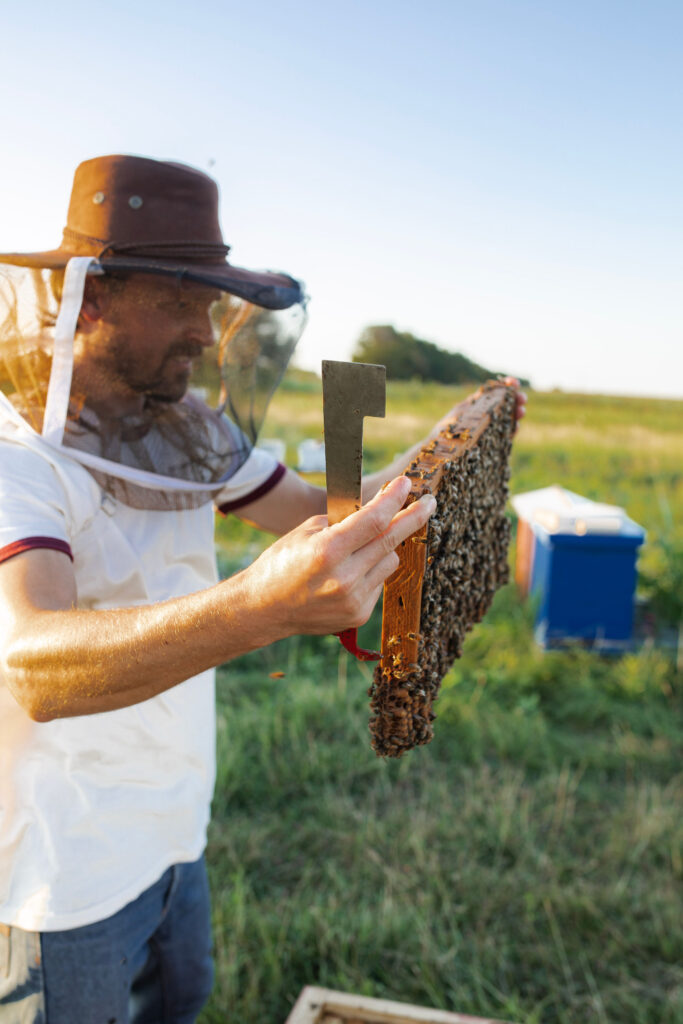
That is exactly what Respite Bee Farm does. We serve landowners across the Waco area and McLennan County who want the ag exemption without having to manage bees themselves. I will come out, assess your land, place the right number of colonies for your acreage, and manage those hives through the season. As well as keep the inspection records and know what MCAD wants to see.
We do this because we care about the land and the bees on it — not just to check a box.
We Manage the Hives. You Qualify the Land.
Respite Bee Farm provides full-service beekeeping ag exemption management for landowners in Waco and McLennan County. We handle installation, hive management, so that you can enjoy the exemption without all of the hassle of beekeeping.
What to Look for in a Beekeeping Service
If you hire any beekeeping service, ours or someone else’s, verify these things before hives go on your land:
- Current TAIS registration: The Texas Apiary Inspection Service required beekeeper registration starting September 1, 2023. Respite Bee Farm is fully registered.
- Liability insurance: Any reputable operation carries coverage. Ask to see proof before signing anything.
- Documentation practices: Your MCAD application requires records — hive inspection logs, evidence of active colonies, and production notes. Your provider should supply all of this. Respite does.
- Real experience: Ask how long they’ve kept bees. Ask them to walk you through a hive. A few questions will tell you whether you’re talking to someone with genuine knowledge or someone who recently bought equipment.
How to Apply for the McLennan County Ag Exemption Through Beekeeping
The application is Texas Form 50-129 — Application for 1-d-1 Open-Space Agricultural Use Appraisal. You file it with the McLennan Central Appraisal District. The annual deadline is April 30. Late applications may be accepted through mid-summer with a penalty, but don’t rely on that, file on time.
When you apply, gather documentation that demonstrates genuine, ongoing agricultural use. Here is what MCAD typically looks for:
Supporting Documentation for Your Application
- Hive purchase receipts or a signed lease agreement with your beekeeper
- Hive inspection and management logs showing active colonies
- Dated photographs of hives on your property
- Records of honey or hive product production — even for personal use
- Prior ag use history if applicable (hay records, grazing leases, livestock receipts)
The appraisal district staff are generally willing to walk you through the process. Don’t hesitate to call them and ask what they need for your specific situation. They would rather you come in prepared.
A Final Word from a Working Beekeeper
I am a beekeeper, not a tax attorney or an accountant. Nothing in this post is legal or financial advice. The information here is drawn from MCAD’s published 2024 guidelines and Texas state law. However, the appraisal district has final authority over how these rules apply to your specific property, and guidelines can change. Confirm everything directly with MCAD. If the dollar amounts are significant, consider speaking with a property tax consultant who specializes in agricultural valuations in Central Texas.
What I can tell you is what I’ve seen. Landowners in McLennan County who approach this honestly — maintaining real, active hives and keeping clear documentation — find the process straightforward. The ones who try to shortcut it eventually run into problems. There is no version of this where you don’t actually have to have bees.
Bees reward the same thing most worthwhile things reward: showing up consistently and paying attention.
If you have land near Waco and want to find out whether the McLennan County ag exemption through beekeeping is the right path for your property, we are glad to talk with you. That conversation doesn’t cost anything, and it usually answers the question pretty quickly.
Ready to Put Your Land to Work?
Respite Bee Farm serves landowners in Waco, McLennan County, and across Central Texas. We install and manage hives to help you qualify for the McLennan County ag exemption — and we do it right.
Sources: McLennan Central Appraisal District Beekeeping Intensity Guidelines (2024) · Texas Property Tax Code, Chapter 23, Subchapter D, §23.51 · Texas Agriculture Code, §131.001 · Texas Apiary Inspection Service (TAIS) · Texas Comptroller of Public Accounts. Requirements are subject to change. Always confirm current standards with MCAD at (254) 752-9864 or mclennancad.org.